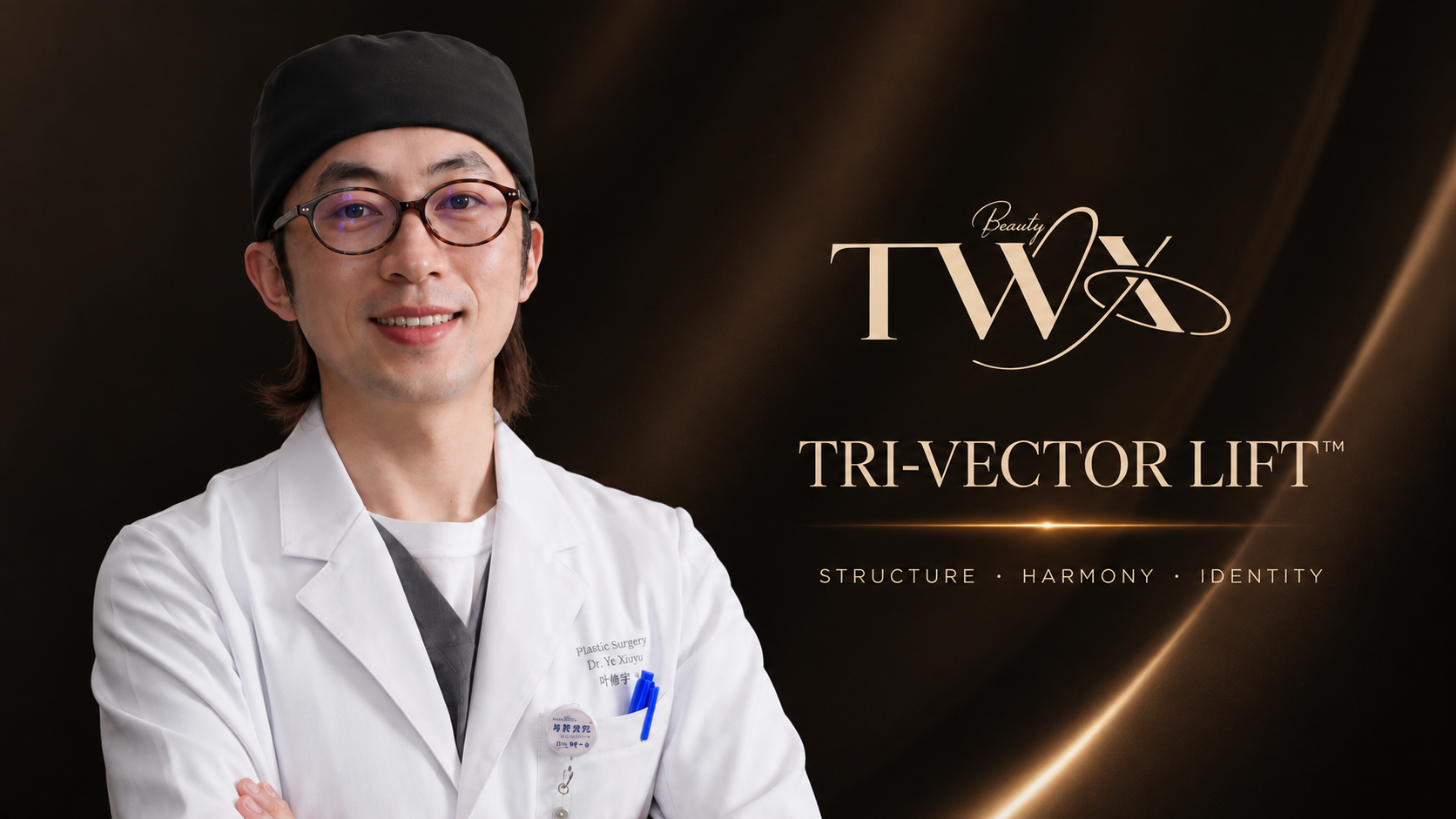
A structural, individualized approach to facial rejuvenation designed to restore support, refine proportion, and preserve identity.
A Different Question About Facial Rejuvenation
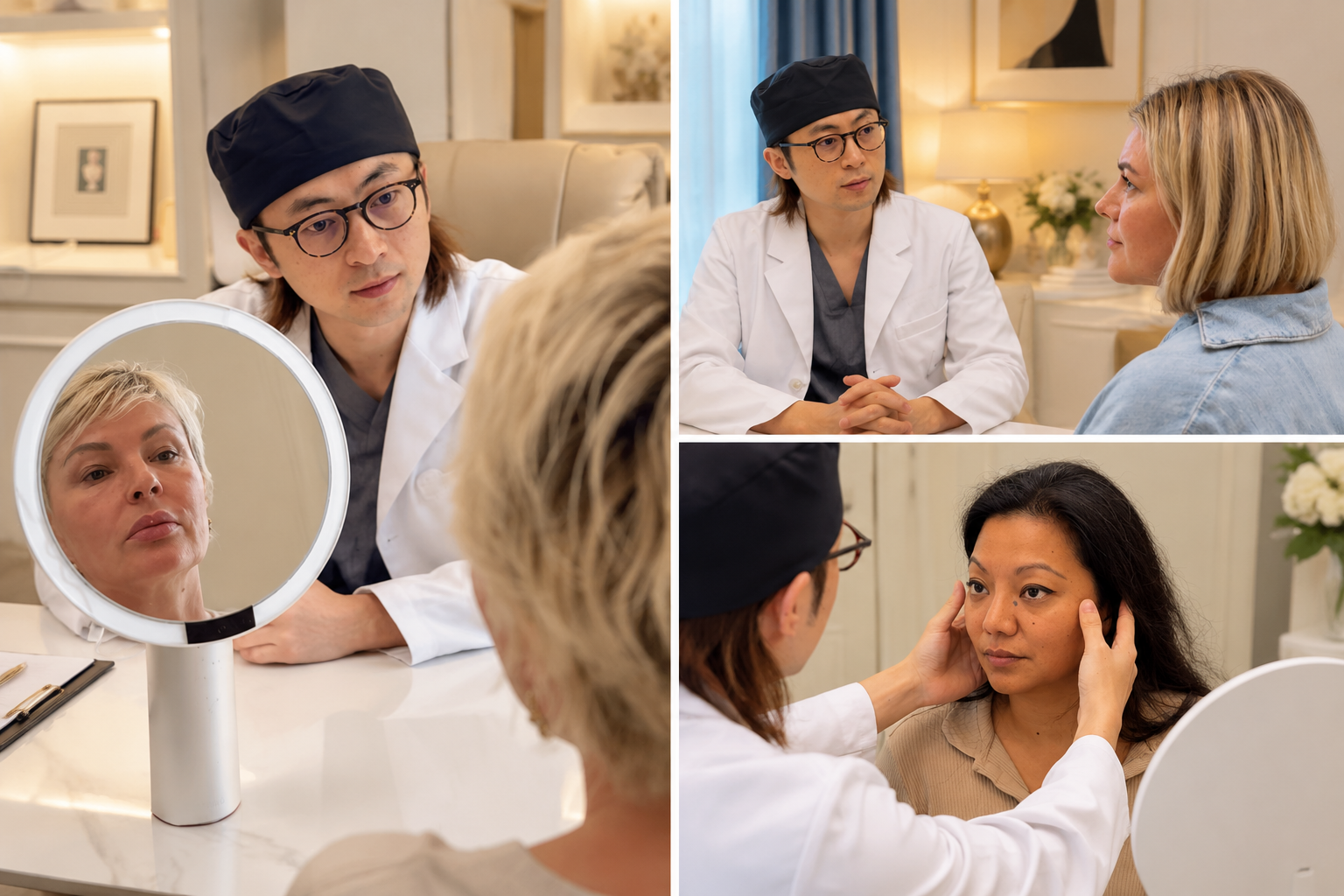
Facial rejuvenation is often described in terms of how much younger a person can look. Dr. Ye Xiuyu begins with a different question: what has changed in the face, what is creating the impression of fatigue or heaviness, and which characteristics should remain untouched? For him, the goal is not to replace a patient’s identity with a standardized “younger face.” It is to understand the relationship between facial support, soft-tissue position, contour, proportion and expression, then design a plan that allows the face to look more balanced, refreshed and recognizably its own.
This philosophy is the foundation of Tri-Vector Lift™, Dr. Ye’s individualized facial rejuvenation framework. Rather than treating facial aging as a single problem located only in the skin, the approach considers the face as a three-dimensional structure. Changes in support, tissue position and lower-face definition can interact with one another; therefore, the direction, extent and combination of treatment should be determined by the individual face rather than by a fixed template.
Who Is Dr. Ye Xiuyu?
Dr. Ye Xiuyu is a plastic surgeon whose clinical focus includes facial rejuvenation and SMAS-based lifting concepts. His work is guided by a combination of anatomical understanding and aesthetic planning: the technical objective is not simply to create tension, but to decide where support has changed, how facial proportions interact, and how much correction is appropriate for the patient’s age, anatomy and personal character.
In consultation, this means looking beyond a single line, fold or isolated area. A softer jawline may relate to more than skin laxity; a tired appearance may be influenced by changes in the midface, lower face and the transition between facial zones. Dr. Ye’s design process therefore emphasizes the face as a whole. The intended result is not an exaggerated transformation, but a more coherent relationship between structure and appearance.
Three words summarize this philosophy: Structure, Harmony and Identity. Structure refers to the support and position that shape the face. Harmony refers to the balance between facial regions rather than the pursuit of one ideal feature. Identity means preserving the characteristics that make a patient recognizable—the eyes, expression, proportions and personal presence that should not be erased by rejuvenation.
What Is Tri-Vector Lift™?
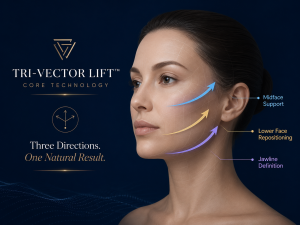
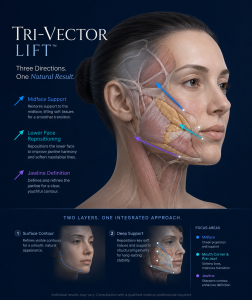
Tri-Vector Lift™ is not presented as one fixed operation for every patient. It is a planning system built around individualized facial assessment. The name reflects a core idea: facial rejuvenation should consider the direction of structural change rather than relying on indiscriminate tightening. Depending on the patient, the plan may emphasize midface support, lower-face repositioning, jawline definition or a combination of these priorities.
Before a plan is selected, several variables matter: age, skeletal framework, degree and distribution of soft-tissue laxity, facial volume, skin condition, previous procedures, asymmetry, recovery expectations and the patient’s own aesthetic goals. Two people of the same age may therefore require very different strategies. One may need only subtle refinement; another may have more significant support loss and require a more structural approach.
The central principle is simple: the treatment should follow the face. The face should not be forced to follow the treatment
Why Structure Matters More Than Simply Pulling the Skin
A face can appear older or more tired without a dramatic increase in wrinkles. The impression may come from changes in tissue position, reduced definition around the jawline, altered transitions through the midface, or a general loss of structural clarity. If rejuvenation focuses only on making the surface tighter, it may fail to address the pattern that created the aged appearance in the first place.
Structural planning does not mean making every face sharper or more angular. It means identifying which relationships have changed and restoring balance without overcorrection. For one patient, that may mean improving support through the midface. For another, the lower face and jawline may be the dominant concern. In another case, multiple zones may need to be considered together so that the result does not look disconnected.
Three Levels of Individualized Planning
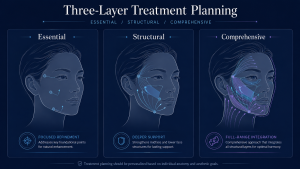
Within the Tri-Vector Lift™ framework, treatment planning can be understood through three broad levels. These levels are not packages or rankings; they describe different degrees of structural need.
Essential Enhancement is intended for faces with relatively mild laxity or early contour change. The emphasis is on selective refinement, preserving natural movement and avoiding unnecessary intervention. The objective is often subtle: clearer contour, improved balance and a refreshed appearance while maintaining the patient’s original facial language.
Structural Enhancement is considered when laxity and support loss are more established. Planning places greater emphasis on deeper repositioning, restoration of midface support and improvement of lower-face and jawline definition. The aim is to rebuild facial coherence rather than create superficial tightness.
Comprehensive Enhancement is used conceptually when changes involve several facial regions and need to be assessed as one system. The plan may integrate multiple structural priorities so that the midface, lower face, jawline and surrounding proportions are treated in relation to one another. The extent of any procedure remains individualized after in-person assessment.
From Consultation to an Individual Plan
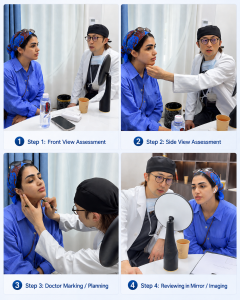
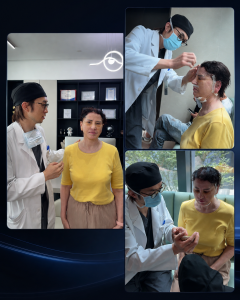
The design process begins before the operating room. Facial assessment includes the patient at rest and in expression, from the front, oblique and profile views. Dr. Ye evaluates where the face has changed, which areas are contributing most to the patient’s concern, and which features are essential to preserve.
A good plan must also consider what not to change. More correction is not automatically better correction. Over-treating one region can disturb the relationship between adjacent areas or create a result that feels unfamiliar. For this reason, the final strategy should reflect both anatomical need and aesthetic restraint.
The discussion also includes recovery, expected short-term swelling or bruising, scar placement when relevant, previous treatment history and realistic limitations. Individual outcomes and recovery vary, and a website or photograph cannot determine candidacy; a personal medical assessment is required.
Real Recovery Is Part of the Story
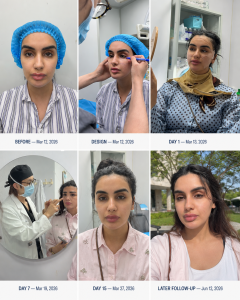
A credible rejuvenation story should not jump directly from “before” to a polished final photograph. Recovery is part of treatment, and showing it responsibly helps patients understand that early postoperative appearance is temporary and individual.
A useful patient timeline can include the preoperative condition, the design stage, an early postoperative image, approximately Day 7, approximately Day 15, and a later follow-up once the tissues have had more time to settle. Early swelling, bruising, dressings or temporary asymmetry may be visible. These images should be presented as documentation rather than as a promise that every patient will recover on the same schedule.
For the website, the strongest recovery series is one patient photographed repeatedly under comparable conditions. Consistent angle, distance and lighting make the documentation easier to understand and reduce the impression that photography is being used to exaggerate a result.
How to Read Before-and-After Results
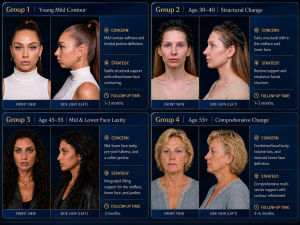
Before-and-after photography is most informative when it shows more than a dramatic visual difference. Look for whether the patient still looks like the same person, whether facial expression remains natural, whether the jawline and midface relate more coherently, and whether the result fits the patient’s age and original anatomy.
The website should therefore present a range of patients rather than only the most dramatic transformations. Younger patients with early contour concerns, patients with moderate support loss, and older patients with more advanced facial changes demonstrate an important point: there is no single Tri-Vector Lift™ face. The strategy changes because the person changes.
For every case, three short descriptors are more useful than a long list of procedure names: Concern, Strategy and Outcome. This keeps the focus on clinical reasoning and individual design.
Why Preserving Identity Matters
For Dr. Ye, a successful result should not require the patient to explain why they look different. The face may appear more rested, more defined or more balanced, but the person’s recognizable identity should remain.
This is especially important in facial rejuvenation because identity is carried by more than isolated features. It is present in expression, eye shape, facial width, soft-tissue character and the subtle relationships that make one face distinct from another. A technically tighter result is not necessarily a more harmonious one.
The philosophy behind Tri-Vector Lift™ can therefore be summarized in a single idea: rejuvenation should restore what time has changed without erasing what time has made personal.
For International Patients
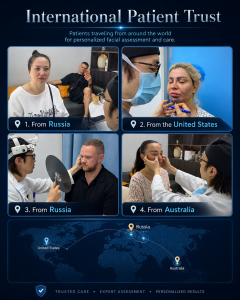
Patients considering treatment away from home need more than an attractive final image. They need a clear pathway for consultation, medical history review, travel timing, in-person assessment, postoperative care and follow-up. International planning should allow adequate time for recovery and should never be based solely on social-media photographs.
The website can help by showing the real patient journey—from initial communication and consultation through design, treatment, early recovery and follow-up—so that trust is built through process rather than through claims.
Questions Patients Commonly Ask
· Is Tri-Vector Lift™ one standardized procedure?
No. It is described here as an individualized planning framework. The exact surgical or non-surgical components, if any, depend on examination, anatomy, previous treatments and treatment goals.
· Will I look like a different person?
The stated aesthetic goal is to preserve recognizable facial identity while improving balance and structural clarity. No specific result can be guaranteed.
· How long is recovery?
Recovery varies with the extent of treatment and the individual. Swelling, bruising and temporary changes are expected after many facial procedures. A personalized timeline should be discussed during consultation.
· Which level—Essential, Structural or Comprehensive—is right for me?
This cannot be determined from age alone. Facial anatomy, laxity, support, skin condition, prior procedures and personal goals all matter.
· Can photographs determine whether I am a candidate?
Photographs can support an initial discussion, but they do not replace an in-person medical examination or individualized risk assessment.
One Face. One Plan. One Harmony. One Design.
The purpose of facial rejuvenation is not to chase a universal image of youth. It is to understand an individual face well enough to know where intervention may help—and where restraint matters more. Dr. Ye Xiuyu’s Tri-Vector Lift™ philosophy places structure, harmony and identity at the center of that decision.
For patients exploring facial rejuvenation, the next step is not choosing a package from a website. It is a professional consultation that considers anatomy, medical history, expectations, risks, recovery and the full range of appropriate options.
Medical & Website Disclaimer
This article is for general educational and brand-information purposes and does not constitute medical advice, diagnosis or a guarantee of outcome. Treatment suitability, technique, risks, benefits and recovery differ between individuals and must be assessed by a qualified clinician. Before-and-after and recovery images represent individual patients only and should include documented consent and accurate follow-up timing. Any professional titles, awards, institutional affiliations, trademark ownership claims or statements such as “founder,” “chief physician,” or “expert” should be published only after the website operator has verified the relevant credentials and local advertising requirements.